Search for an engine hoist and you will also find engine cranes, shop cranes and cherry pickers. They are the same tool: a hydraulic crane on casters, with a long boom, a chain and hook, and a long-ram hydraulic cylinder that raises the boom. The name depends on where you are, and the part that matters when you buy is how capacity changes along the boom.
Engine hoist, engine crane, shop crane, cherry picker
| Name | Where it is used |
|---|---|
| Engine hoist | North America: garages, parts stores, online retail |
| Cherry picker | North American workshop slang for the same crane |
| Engine crane | UK, Ireland, Australia, New Zealand |
| Shop crane / workshop crane | Industrial supply and general workshop use |
We build the same crane for all of these markets and print the term your market uses on the label and in the manual.
How an engine crane works
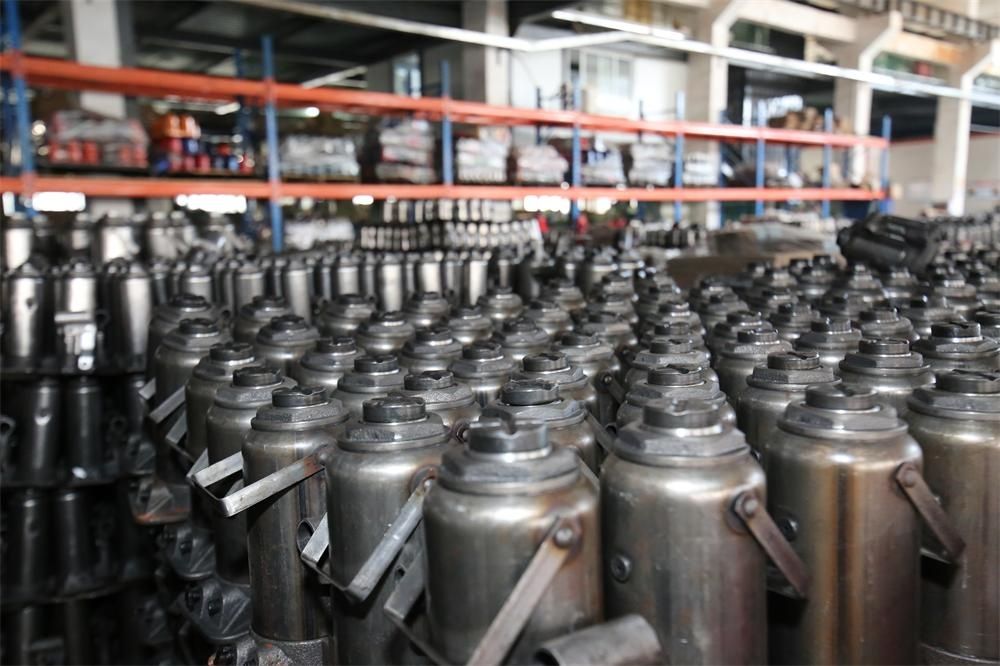
A long-ram hydraulic cylinder, pumped by hand like a bottle jack, pushes the boom up around a pivot on the mast. The boom is telescopic: an inner section slides out and is pinned at several positions to change the reach. A chain and hook hang from the end of the boom, and the legs with their casters spread under the load to keep the crane stable. The release valve on the cylinder lowers the load, just like on a jack; our guide on how a hydraulic jack works explains the hydraulics.
Why capacity drops as the boom extends
The capacity printed on the box is the rating at the shortest boom position. Extend the boom and the load hangs further from the pivot and from the legs, so the same weight produces a larger turning moment on the boom, the cylinder and the chassis. Each position therefore has its own, lower rating. On a typical 2-ton crane with four boom positions the ratings step down from 2 t with the boom fully retracted to 0.5 t at full extension.
Always read the rating for the boom position you are using, not the number on the box. That is why our labels show the rating for every boom position, in your language.
What size engine hoist do you need?
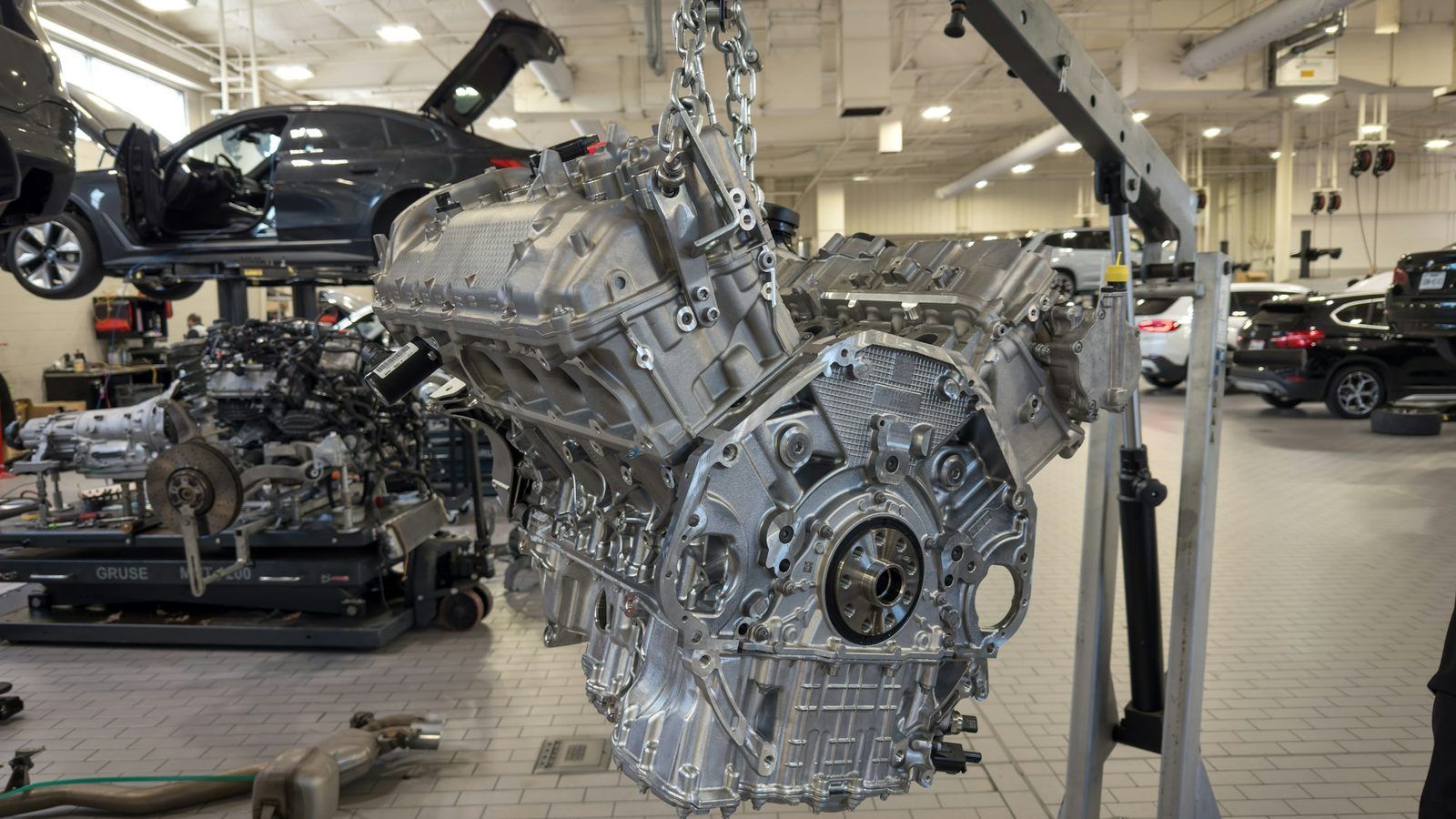
- Weigh the load. Engine weight with the manifolds, accessories and flywheel attached, plus the gearbox if it comes out together. Check the manufacturer’s figure rather than guessing.
- Find the reach. The hook has to sit over the engine’s centre of gravity while the legs stay clear of the vehicle. On most cars that needs one of the middle or longer boom positions.
- Check the rating at that position and keep a margin above the load.
- Check the lift height. The engine has to clear the radiator support and the front of the vehicle.
- Check the legs. They must fit under or around the vehicle and roll on your floor.
For most car and light-truck engines a 2-ton folding crane is the usual choice. Truck diesels and industrial work call for a 3-ton fixed-leg crane.
Folding or fixed-leg crane
Folding cranes fold their legs and boom up for storage and stand in a small corner; they are the volume seller for garages, retail and home workshops. Fixed-leg cranes have a heavier frame, reach further and lift higher, and are preferred in truck and industrial workshops. Our folding engine cranes come in 1 and 2 tons; 3-ton and industrial models have fixed legs for stiffness.
The engine leveler: why almost every buyer needs one
An engine leveler hangs between the hook and the engine. Turning its screw handle moves the lifting point along a bar, tilting the engine forwards or backwards while it hangs. That is how you angle an engine out past the firewall, or line up the gearbox input shaft when refitting. Without a leveler you are lowering the engine and moving chains every time the angle is wrong.
How to lift an engine safely
- Work on a smooth, level concrete floor and plan a clear path to the engine stand.
- Disconnect everything: hoses, wiring, mounts and gearbox bolts, and check nothing is still attached.
- Set the boom to the position that reaches the engine’s centre of gravity, and note the rating for that position.
- Attach the chain or the leveler to the engine’s lifting eyes or to grade-rated bolts in solid threaded holes, never to brackets or manifolds.
- Close the release valve and pump until the chains are tight, then check the balance before lifting further.
- Lift slowly, tilting with the leveler as needed, and watch for anything still connected.
- Lower the engine close to the floor before you roll the crane; move it slowly with the legs leading.
- Mount the engine on an engine stand or lower it onto blocks; never work on an engine hanging from the crane.
For distributors: labels, ratings and spare parts
Print all boom-position ratings on the label, in the local term: engine hoist, engine crane or shop crane. The hydraulic cylinder on our cranes is a standard long ram jack that we also sell separately, so spares are always available. Engine levelers ship in small cartons and fill the spare corners of a container; most crane buyers add one. Cranes ship knocked-down in cartons and mix well with levelers, engine stands, long ram jacks and shop presses, from 10 pieces per model.
See our engine cranes 0.5–3 t and engine stands, or request a quote.